Ioanichie Druhora
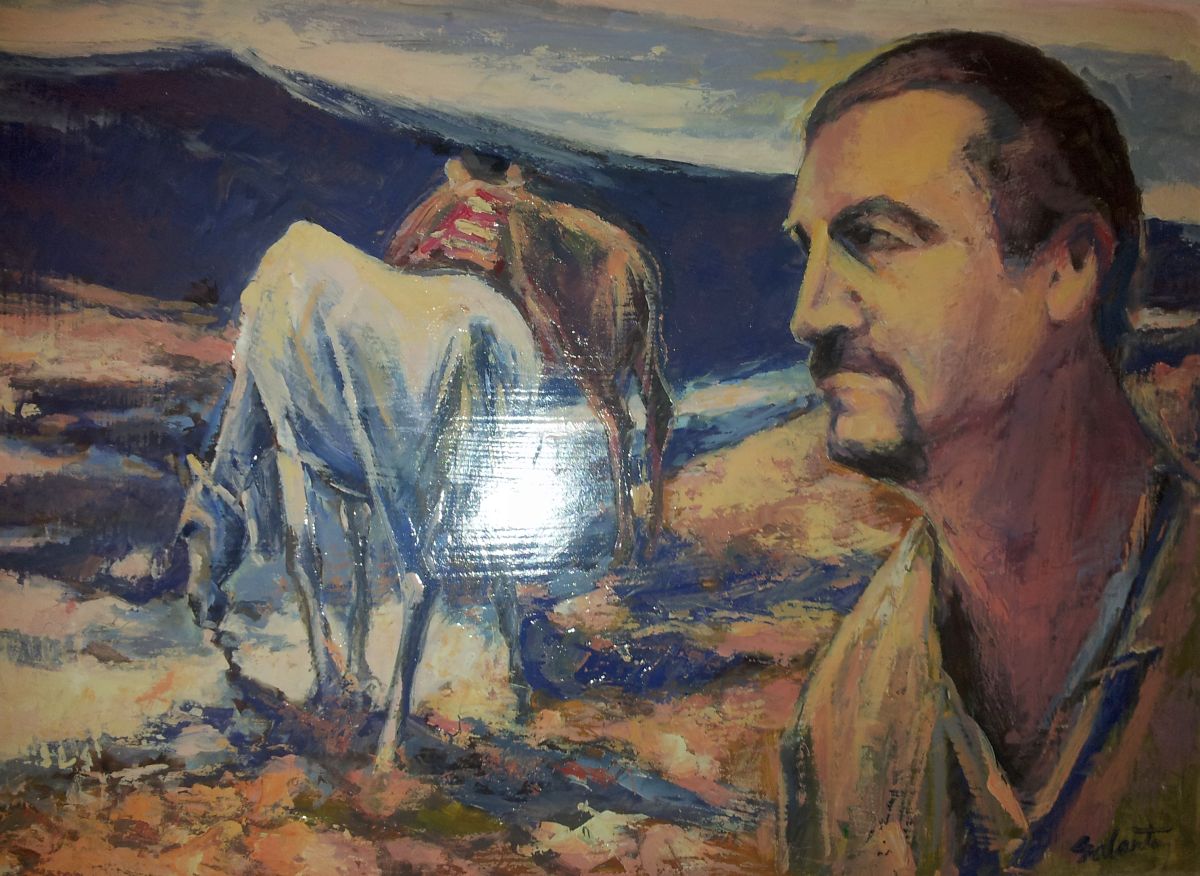
Keywords: Ioanichie Druhora, Baica, Hida, the 1848 revolution, Transylvania
Grandparents are God’s gift to grandchildren. How beautifully a child grows who has the chance to enjoy the care and love of grandparents… How beautiful and beloved are their stories, and how they remain unforgettable forever. What a privilege to have a childhood in which you can enjoy grandparents who have stories to tell… Even if sometimes, as you grow up, you can no longer explain or fully grasp the memory of certain stories, details, or meanings from them, even though they have been so deeply imprinted in your memory. Not that anything is wrong, but those stories were repeated and detailed endlessly, because, of course, the grandfather cannot refuse his grandchild who is eager to learn more events or details (“Tell me more, tell me more…”).
How could one ever forget the adventures of the young Zaharia, uprooted from his native lands (Baica – Hida) due to hardship, who at the age of 15 ended up in the Lupeni – Vulcan mines, where he worked hard and experienced extraordinary events. Who lived through the 1918 union of Transylvania with Romania at one of the hotspots and pivotal moments of national history, in the Jiu Valley, during the miners’ strikes and the conflicts between Romanian, Saxon, and anarchist guards, and the transition from Austro-Hungarian to Romanian administration. Turbulent times, in which the “powder keg” — the conflict between the Romanian army and the guards paid 30 crowns a day, as described by grandfather in stories repeated endlessly for his curiosity-driven grandchild — was hard to understand. “Grandfather (the local word for grandfather), but who is on whose side ʻholdingʻ? (Romanians, Hungarians, Saxons…; miners, strikers, anarchists, agitators, rebels, red cockades, army, police, gendarmerie, the population that had weapons and ammunition…).” The child turned the story into images, in which he vividly saw the battles between the soldiers of the rifle companies and the machine gun platoons, with the rebels wearing red cockades and the anarchists… Fighting, chaos, weapons, ammunition…, and grandfather was a true Gavroche…
How impressive were the stories in which grandfather Zaharia, who became a policeman in Cluj at the end of the second decade of the last century, painted a vivid picture of interwar Cluj. It was hard for a child to understand the emphasis on the nationalist attitude of young Romanians and the antisemitism of the student movements of that period, yet grandfather’s efforts to save the young Jews from the hands of the students who wanted to shave their eyebrows (?) seemed to me acts of heroism, even though I also felt a note of humor during the storytelling. I could almost imagine the old taverns and small restaurants frequented by students, the heated discussions until late at night and the antisemitic student disturbances, under the slogan “Numerus clausus”, for limiting the number of ʻJewsʼ in faculties, schools, free professions etc., to a number proportional to the number of Jews relative to that of Romanians in the country… And the students’ running through the dark and narrow streets of Cluj… “Grandfather, but were ʻthe Jewsʼ bad? Or were the students bad?”… Grandfather spoke with respect about the ʻgreat peopleʼ of Cluj, some of whom he came to know personally. How much he admired Iuliu Hațieganu, and what a beautiful image he had of the renowned professor, who would instruct the girls in the house to always invite ʻthe policemanʼ to dinner when he was in the area, or at least for a cup of tea, as a distinguished guest. Grandfather reluctantly gave up Cluj to return home, to Baica, where he had to ʻtake care ofʼ his aunt, who had no descendants (ʻthe soul’s obligationʼ being a custom that could not be refused). He married Maria, and their children came (Anisia, my mother, 1932) and Gheorghe (my uncle, 1941, who was my biology teacher and instilled in me a love for the natural sciences; his wife, Onorica, was my schoolteacher; she was exceptionally demanding, but an exceptional teacher).
If the nephew “was good”, the greatest reward was the ʻbox of medalsʼ… Which grandfather rarely took out of hiding, because it was a secret that had to be kept with great care… No one was supposed to know that he had received the most important medals for his heroism during the war. The greater my curiosity, the more secretive grandfather was. He spoke reluctantly, about distant places, about terrible winters, with snow and fierce frosts, bitter cold and hunger, white nights, with armies fighting for life and death, attacks and repulses, shells, explosions, gunfire, the dead, the wounded… I wanted to know more, I wanted to understand. The other grandfather, Aurel, didn’t help me any more… He told me equally disturbing, dark stories, about terrifying battles, people torn apart by shells, frozen by the frost, starving, sick, who complained about death… With the fear of never seeing their families, parents, wives, children again… “But who were you with? Why did you side with them? Are they better?“… In vain the old men tried to explain (“It is not the times under man, but poor man under the times…“), for the child, the grandparents were ‘above’ everyone…
I didn’t understand… Why did one end up in Odessa during the war and the other in the Tatra Mountains? How could two people from the same village (a tiny village in Transylvania) be in different armies, fighting in different camps, on different fronts? Why was there a war, what were they fighting for, who, what were they winning? What did they want to win? “Who were the good ones? Were the others bad”? How could grandfather, a descendant of the martyr Ioanichie, who died in terrible torment, fight alongside the Hungarians, those who killed Ioanichie, and receive honors from them? (In his old age, in Hida, grandfather wanted to buy a fresh loaf of bread. The seller, a Hungarian, turned to his wife and said in Hungarian, mockingly, a few insulting things about the old ʻcrazyʼ man who had pretensions (at the time, even bread was rationed)… The reply came promptly, in Hungarian, to the seller’s horror: a man who had received the medal for bravery on the front, awarded only to Hungarian officers, did not allow a Hungarian to make fun of him. From that moment on, grandfather was served the best bread, and was constantly invited to the ʻprivate roomʼ in the restaurant, for ʻa drinkʼ).
I felt there was a certain reserve between the grandparents… I believe they couldn’t get past some old pride, but also the striking memories from the war. At least, I never managed to make them talk about the war together, to answer my questions, to explain to me… What life and destiny truly mean… Grandfather Aurel remained a lifelong friend of Ioan, the grandfather of my wife Adriana, who brought him back from the front, more dead than alive, right from Czechoslovakia. He was grateful to him for his whole life for saving him from death, ready to sacrifice himself just to save him, even though both believed they wouldn’t make it (he was sick with typhus and extremely weakened; there were no medicines, and the journey home was exhausting and full of dangers). Grandfather Aurel was extremely happy about our wedding, saying that it was meant to be… Grandfather Zaharie the same, and when Paul was born he said he would teach him everything he knew and tell him the true history (?)… He caught a bad cold waiting for us outside to come back from Cluj, to open the gate for us, eager to see Paul… He developed pneumonia and died a few days later; we found him in the morning in his room, leaning on the bed with his elbows, standing…
Grandfather died on his feet! It seemed he hadn’t finished his stories, and he wanted to tell me one more… I revisited and relived in an instant all his stories… The moments when a child eagerly waited to reach grandfather’s house on the edge of Băica… To listen to his stories with reverence… To stroll through the beautiful garden, with fresh, fragrant, and dizzily beautiful grass and wildflowers, in the soil where grandfather had found buried relics from the Dacian era, but also a Roman dagger, or bombs from the war… From the garden one would pass into a dreamlike zone, the ascending valley of the Băicuța stream, of incredible natural beauty, leading to the clearings with daffodils and the forests of Jernău… Just a couple of steps from grandfather’s garden, on the right side of the stream, was the cave carved into the rock, about which the children knew numerous legends, which from the valley appeared as a black, threatening hole on the rocky and high wall, strongly lit and bathed in the midday sun. I was so amazed by the cold, crystal-clear water in the cave, the colorful pebbles, many reddish, visible on the water’s bottom right at the cave’s entrance, the drops flowing from the stone ceiling, splashing powerfully into the water, in the complete silence of the cave. A little further on, on the left side of the Băicuța stream, was the famous Puturoasa Spring, with an ever-flowing source, with cold, crystal-clear water, at the foot of an old but imposing grove. Both grandparents agreed that nowhere in the world is there water as good as that taken directly from the Puturoasa spring, in a clay jug with a ‘handle’ and a ‘spout’ (the people of Băica used to go to Băicuța on holidays for water in beautiful jugs, decorated with folk motifs and glazed)… The child of then wanted to listen and relisten endlessly, on the ʻtărnațʼ, sitting in grandfather’s arms, the stories about Ioanichie and his long pistols, with nailed wooden handles, with which “Mâțarul”, Ioanichie’s descendant, went hunting. How, later, grandfather had to hide them so they wouldn’t be found by the people of the new regime… How he managed to keep the curved hussar saber with its metal scabbard and horseshoe-shaped fittings, but for fear of it being found by the authorities, father later gave it to someone to melt it down and make kitchen knives from it… How he would wait for me during the holiday vacations, with pears from his garden, kept until Christmas (I have never eaten Curé pears so flavorful, buttery, and aromatic…), and later, after I grew up, with a cold glass of wine brought from the special reserve kept for grandchildren (a glass of wine has never seemed as good to me as the one made by grandfather; in fact, in the time when there were vineyards on the sunny hills of Băica, the quality wine made by grandfather was renowned). How he would wait for me during my high school or university vacations to come from Cluj, to tell me the news from Radio “Free Europe” or “Voice of America” and for me to tell him how Cluj is ʻnowʼ, or how the students in Cluj are / behave… To talk about our favorite writers and books (he loved Henryk Sienkiewicz enormously; he read “Potopul” four times…).
The most beautiful stories, even when they ended sadly, were the ones about Ioanichie, as well as about his death, which was passed down to the grandfather by his grandson, though the whole village of Baica knew about it. The grandfather was very proud of his grandson Ioanichie, about whom he told me fantastic stories. The descendant of a hero could only be a “giant,” a man with extraordinary powers. And our great-grandfather was such a man, known as such by the entire village. He went hunting with the guns left behind by Ioanichie, had such strength in his hands that he would crush wheat and corn kernels between his fingers for the birds in the yard (…). One day, while he was hunting or working in the fields, a strange animal emerged from the ground, resembling a large cat or dog, black in color (it is said it was “the Earth’s Little Cat”…), which he managed to catch. He let it go because the animal had scratched him very badly, forcing him to release it, and it made itself invisible. The wound healed very slowly, but from that moment on, the great-grandfather acquired supernatural powers (…): on any wound he placed his hand, it would heal shortly after, whether in people or in any animals. The great-grandfather’s healing power soon became known in the village, and then, over time, in all the surrounding villages. Many people came with wounds or various illnesses to ask for his help, often bringing their sick animals to be healed as well. He remained in people’s memory as a chosen man, with a special gift, given by the divine to help his fellow beings. His nickname, “Mâțarul” (or “Mâciocul”), from the grace he received when he caught “the Earth’s Little Cat,” was passed on (the grandfather was not at all pleased with this nickname…). In any case, nicknames were a common thing in the village, every man having one, these being passed on, ʻin the familyʼ. Including the other grandfather, who would call him “Mâcioc” more in jest than in earnest, was very careful not to accidentally call him that in his presence, knowing his quick temper. Obviously, the grandfather on the father’s side also did not much enjoy the inherited nickname (“Bila”), and no one made the mistake of saying or even using the word “bilă” in his vicinity, as he too was known as a man of fierce temper.
Returning to my favorite story, my grandfather would retell me how Ioanichie, tribune of Avram Iancu and a great fighter for the rights of the Romanians, was captured in 1849 by Hungarian troops and taken to Hida, a strong center of the Hungarian national guards, led by Hatfaludy. The Hungarians wanted to execute him in public, on Monday, a country market day, to give a lesson to the Romanians who supported Avram Iancu’s revolution. To frighten the inhabitants of the villages along the Almaș Valley, the Hungarian guards had prepared in the center of the town a true ordeal for Ioanichie, which all the Romanians from the market were to be forced to witness. Realizing the fate that awaited him and the impact his execution would have had on the inhabitants of the surrounding villages, when he reached the bridge over the Almaș, just before entering the center of the village of Hida, Ioanichie broke free from the guards’ hold and jumped into the river. It was late winter; the Almaș was flowing fast, high, turbulent, with ice floes. At that time, the valley was narrow and the Almaș was deep in its bed, and due to the snowmelt, the water was much higher than usual. Ioanichie was handcuffed and was wearing a woolen coat (suman) which, soaked with ice-cold water, was dragging him down and greatly hindering his ability to stay afloat and swim. Immediately after his jump from the bridge, the guards fired their rifles, but missed him. The cavalry split into two groups and pursued him on both sides of the Almaș Valley, firing their rifles at him. Because there was vegetation along the valley and the trees did not allow them to get close, they followed him for several kilometers without being able to catch or shoot him. Ioanichie was a good swimmer, but the ice-cold water, the weight of the coat, and his bound hands hindered his movement or any moment to get out of the water and escape his pursuers. He managed to reach Tihău (approximately 20 km between Hida and Tihău), where, at the mill, he was caught with a net by the miller, who pulled him out of the water directly into the hands of the Hungarian pursuers. Initially, the mounted guards wanted to take him back to Hida, but on the way they encountered other guards heading to Hida with several captured Romanian fighters who were also to be executed, and they abandoned the plan for fear of a skirmish from the Baica people who had learned that Ioanichie had been captured. In Baica, Ioanichie had created a strong legion, with devoted men, who, together with him, carried out strong propaganda in all the villages along the Almaș Valley for the Romanian revolution and for the defense of the national identity. On the way out of Chendrea, on the road to Racîș, a sham trial was held for Ioanichie, which was in fact being prepared in Hida by Hatfaludy and his troops. His maltreatment and ordeal ended on Dealul Șurii in Chendrea. Ioanichie’s fight in the Romanian revolution of 1848 and his death in 1849 made him a hero who remained in the memory and conscience of his descendants, of the Baica people, and of all the inhabitants of the Almaș Valley.
Ioanichie’s story has become a legend. Like all legends, Ioanichie’s is told in different versions (as can be seen from the documents below), blending, like any story, the real with the fantastic, just like grandmothers’ tales. I have tried to find out the truth about Ioanichie and his martyrdom. I am putting at your disposal testimonies provided by modern technology (the internet), with links to the documents, respectively the information sources. Of course, many questions remain. Some, including those asked long ago, by the child in the grandmother’s arms, have not yet found an answer. But many pieces of evidence remain, the childhood stories, the memories passed down from ancestors… and in which many answers can probably be found…
Cluj-Napoca, 2014. Grandmothers’ Stories (Part I – Zaharia): ‘Memories for my son, Paul, and my grandson, Mihai, son of my late brother…‘.
Excerpts from various documents
(‘Cultura poporului’ – BCU Cluj archive, ‘Tribuna învățământului’, ‘Graiul Sălajului’)
Ioanichie Druhora
– The Tribune of the Almaș Valley –
- “Ioanichie Druhora – The Tribune of the Almaș Valley”,
- Article in “Cultura poporului”,
- Cluj, Sunday 9 Dec. 1923
- http://documente.bcucluj.ro/web/bibdigit/periodice/culturapoporului/1923/BCUCLUJ_FP_P1547_1923_003_0037.pdf

Ioanichie Druhora
– The Tribune of the Almaș Valley –
After the revolution of Horia, Cloșca and Crișan, the years 1848 and 1849 are the richest in great moments and memories of high spiritual elevation with regard to our Romanian Transylvania.
Avram Iancu, the King of the Mountains, even under Hungarian and German rule, knew how to militarily organize Transylvania for the great moments of our present days, which war, the good God, and the valor of our Romanian nation have accomplished for us.
From the legionary organization of this province in those, for us, extraordinarily stormy times, we must not overlook that of the region with beautiful memories and fertile plains, the region known as the Almaș Valley, a region which, by order of Avram Iancu, had as its commander the tribune Ioanichie Druhora from the commune of Baica, then belonging to Dobâca county, and later annexed by the Hungarian authorities to Cojocnei county, in order to be more easily overwhelmed with the idea of the Hungarian state.
This tribune, after having fulfilled his sacred mission in the battles for our national liberation in the Almaș Valley and as far as the Someș river, found his death between the communes of Rachiș and Chendrea, without our national history having placed him to this day in the position of honor and glory that is his due.
From then until today, many Romanians have passed along the country road leading from Hida to Tihău, by the Almaș river, but due to the Hungarian and German rule of sad memory, no one had the boldness to shed tears at the grave of this hero and good advisor of Avram Iancu, except his good mother, lelea Ostină, may God forgive her – who herself could only, around midnight, pass between the sentinels of the Hungarian bands of Hatfaludi Antal (Anti) from Hida, to bow down and raise prayers to God for her dear son, who was the soul of our national awakening movements in the Almaș Valley.
The hero, after the dissolution and reformation of our Transylvanian legions, going to the market in Hida (Cojocna county), surely to see his beloved legionaries again, now disarmed, the bands of Hatfaludy Antal (Anti), emerging from the hiding places where they had been during our national struggles, armed to the teeth, rushed and attacked him, and he, after a valiant fight to the death waged with them, leapt into the waves of the Almaș river, and so eyewitnesses tell us that the “giant” with the oar passed seven ponds and seven mills, without being harmed by the bullets of the Hungarian bands, and he was but a little short of reaching the Someș river, where he believed he could be saved with the help of the legionaries and his friends from those lands.
But at the mill in Tihău his strength waned a little, and the devil also crossed his path, for the miller was a traitor to the Romanians and a spy for the Hungarians. Here he was then captured, shackled in chains, and escorted along the country road toward the commune of Hida, the capital of Hatfaludi Anti. Upon reaching Movila (Dâmbu) Boanchiu, situated between the communes of Rachiș and Chendrea – as a result of the maltreatment by the Hungarian band – he fell to the ground, having been killed by the very sacrilegious hand of the band leader Hatfaludi Antal (Anti), then the greatest enemy and persecutor of our Romanian element in the Almaș Valley, whose descendants breathe our Romanian air freely today, perhaps believing in good faith that we do not know of their uncle’s sins and misdeeds.
Fellow Romanians of the Almaș Valley!
Bow down at Movila (Dâmbu) Boanchiu, for there lie the remains of our tribune!
(Excerpt from “Ioanichie Druhora – Tribunul de pe Valea Almașului”, “Cultura poporului”, Cluj, Sunday 9 Dec. 1923)
- “Serbarea unirii Basarabiei în Hida. Activitate a cercului cultural învățătoresc”,
- Article from “Cultura poporului”,
- Cluj, Sunday 4 May 1924
- http://dspace.bcucluj.ro/jspui/bitstream/123456789/19956/1/BCUCLUJ_FP_P1547_1924_004_0058.pdf

Serbarea unirii Basarabiei în Hida
Activitate a cercului cultural învățătoresc
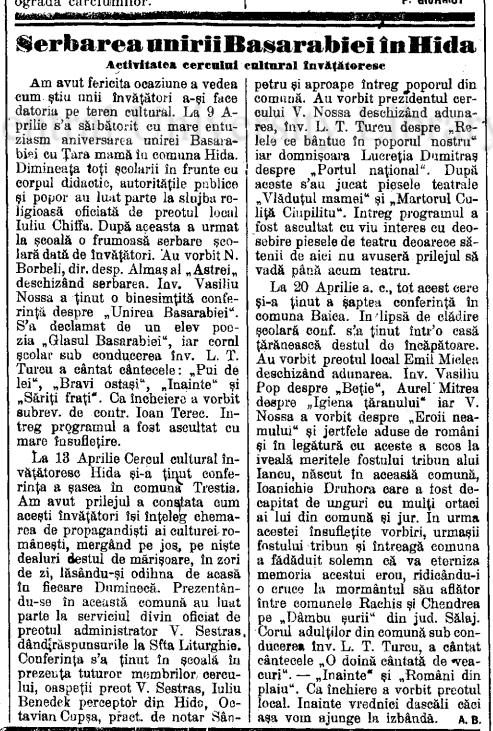
We had the fortunate occasion to see how some teachers know how to fulfill their duty in the cultural sphere. On April 9, the anniversary of the union of Bessarabia with the Motherland was celebrated with great enthusiasm in the commune of Hida…
…On April 20 of this year, this same circle held its seventh conference in the commune of Baica. In the absence of a school building, the conference was held in a fairly spacious peasant house… V. Nossa spoke about “Heroes of the Nation” and the sacrifices made by Romanians, and in connection with these he brought to light the merits of the former tribune, Iancu, born in this commune, Ioanichie Druhora, who was beheaded by the Hungarians along with many of his comrades from the commune and the surrounding area. Following this inspiring speech, the descendants of the former tribune and the entire commune solemnly pledged to immortalize the memory of this hero by erecting a cross at his grave, located between the communes of Rachis and Chendrea, on “Dâmbu șurii” in Sălaj County.
(Excerpt from “The Celebration of the Union of Bessarabia in Hida. Activity of the Teachers’ Cultural Circle”,
Article from “Cultura poporului”, Cluj, Sunday, May 4, 1924)
A Martyr from the Almaș Valley
Ioanichie Druhora
- Article published in:
- TRIBUNA ÎNVĂȚĂMÂNTULUI, no. 683/ February 24 – March 2, 2003, p. 8
- http://users17.jabry.com/bilet/ivanescu/ivdruhor.htm
- Author: Ion Ivănescu
(Professor Ion Ivănescu was born in Bușteni, Prahova County, and graduated from the Faculty of History at the University of Bucharest in 1960. From the completion of his studies until 1996, when he retired, Professor Ivănescu taught at the “Ion Agârbiceanu” High School in the town of Jibou, of which he became an honorary citizen in 2005. http://www.caietesilvane.ro/indexcs.php?cmd=articol&idart=1831)
The land of Silvania has given national history numerous personalities who were destined to remain in the book of the nation as fighters to the point of sacrifice for the social and national liberation of the people to which they belonged. It is our duty to preserve in the Romanian Pantheon Bishop Grigore Maior from Sărănad, who by merit rose to the head of the church at Blaj, Bishop Ignatie Darabant from Oradea, Simion Bărnuțiu from Bocșa, Al. Papiu Ilarian from Bezded, badea Gheorghe from Băsești, or luliu Maniu from Bădacini.
Each of these, who have entered immortality, sacrificed themselves for a just cause of the emancipation of their own people, of shaking off foreign domination. The success of their struggle in 1918 transformed them into the heroes of the nation.
If these great personalities stood out through the culture and learning of higher schools, becoming titled in philosophy, legal sciences, or theology, the Land of Silvania also gave history personalities without much book learning, without higher studies, but endowed with the gift of justice and of the cause of social liberation. Most of them were peasants, well acquainted with and living the hard peasant life, without land, but payers of multiple and heavy taxes and tolls.
The 1848 Revolution also took place in the Land of Silvania. The Romanians, an autochthonous and majority population, were considered by the Hungarian nobility – the “lords of the land” – as “tolerated” and “foreigners.” The land belonged to the large landowners, barons or counts such as Teleki, Banfy, Iozika, Wesselenyi, Haller, and Csaki. The peasants, most of them without land, were forced to take land in use from the nobles, for whom they paid rent in kind, performed many days of corvée, to which was added a series of obligations, both material and in money.
The 1848 Revolution had abolished serfdom, promising land to the peasants. But the Hungarian nobility in Transylvania opposed these reforms.
This reactionary attitude led the peasantry to organize and take revolutionary action, for the application of the agrarian program of the revolution, namely that serfdom be abolished and the land be given to the peasants.
Throughout the entire Almaș Valley, from Jibou to Dragu, the peasants rose to fight against the “landlords” and their wrongdoings. In each village, Tihău, Chechiș, Bălan, Chendrea, Racâș, Hida, and Dragu, assemblies of peasants were organized, electing the militia of lancers led by a tribune, after the model of the moți from the Apuseni Mountains. The priests and village teachers, those who knew letters, read the peasants the proclamations and programs of the revolution at the popular assemblies. Thus proceeded the priest from Dragu – Ilie Chete and the deacon Teodor Pop, the priest from Voievodeni – Vasile Munteanu, but also the priest Silvași Matei from Bălan. In fact, the village priests were encouraged by the ideologue of the revolution, Simion Bărnuțiu, who in his Proclamation of 24 March 1848 wrote: “Priests, if you are true fathers, as the people call you, do not distance yourselves from the rights of the nation, do not separate your interest from that of the Romanian people… until you see the Romanian people happy, who are of one faith with you“. The role of the priests of the Almaș Valley can also be seen from the investigations made by the authorities of the arrested peasants. Filimon Zdroba from Baica, at interrogation, confessed that: “The priest Vasile Munteanu from Voievodeni read us several manifestos that we are free, that the day of the Romanians has come… and that we will be rid of the tyrants, and that the people will no longer serve any lord“. In another investigation, the arrested peasant Lupu Dura, also from Baica, confessed: “The priest from Dragu read us a letter that the yoke of the Romanians has been broken, that their day has risen, and that they will no longer serve as serfs on the land of the nobles“.
The revolutionary movements in the Almaș Valley constitute an integral part of the Transylvanian revolution; they were organized at the local level, but with connections especially in the Bihor and Maramureș regions. At the head of the commune, the locals elected a tribune, surrounded by a group of peasant lancers with the mission of defending the community from the military guards organized by the authorities.
The documents of the time indicate that the most representative tribune in the Almaș Valley was Ioanichie Druhora from Baica. His qualities as a good organizer, a devoted defender of the peasants, and the intransigence demonstrated in applying the revolutionary measures—all these led the villages in the Almaș Valley to elect him tribune and, with his lancers, to implement the revolution’s program in the Almaș Valley.
In April and May, Ioanichie Druhora traveled through the villages of Dragu, Hida, Baica, Racâș, Chendrea, Bălan, Chechis, and Tihău, mobilizing the peasants and recruiting new lancers. The idea of peasant solidarity was constant in the consciousness of tribune Ioanichie Druhora. Only in this way can we explain the establishment of connections with tribune Ioan Bujor from Rona or with the leaders of the insurgents from Turbuța—Zaharie George and Roman Nuț.
The military superiority of the Hungarian national guards led to the bloody suppression of the revolutionary movements in the Almaș Valley. Between Tihău and Gâlgăul Almașului, tribune Ioanichie Druhora was taken prisoner. To intimidate the peasants and bring them to submission, Ioanichie Druhora was paraded in chains through all the villages in the Almaș Valley. Brought to Chendrea, a village considered the nucleus of the revolution, tribune Ioanichie Druhora, after a summary trial, was sentenced to death by hanging. Together with him, five lancers from five villages, close collaborators of tribune Ioanichie Druhora, were hanged. The execution took place on Dealul Surii, where a large number of peasants from each village in the Almaș Valley were forcibly brought to witness the execution. Since then, for the inhabitants of Chendrea and the surrounding villages, Dealul Surii has become the symbol of the Romanian peasant’s martyrdom for social and national liberation.
Until 1918, the Romanians could not erect a troiță at the site of the execution and martyrdom of the lancers led by their tribune Ioanichie Druhora. It was forbidden to recall any episode of the struggle for the emancipation of the Romanians. Only after the Great Union of 1918, at the initiative of Astra – Zalău and with the participation of the people of Chendrea, on June 2—Heroes’ Day—1927, a troiță was erected and consecrated on Dealul Surii in memory of the martyrs of our nation. Then, on Dealul Surii, a large crowd of peasants, the nephews and great-nephews of tribune Ioanichie Druhora and of the lancers, with reverence and piety, attended the service of consecration of the troiță and the commemoration of the martyrs. After the commemorative speeches of the president of Astra and the delegate from Baica, a cultural program dedicated to the peasant heroes of 1848 was held, in which the church choir from Bălan commune stood out.
Seventy-five years have passed since the consecration of the Troiță on Dealul Surii. The wood of the troiță has been worn away by time, but the memory of tribune Ioanichie Druhora and his lancers has not been forgotten.
After 75 years, we welcome the initiative of those who believed that history is the first book of a nation, through which we see the future. History cannot be forgotten, and what the people of Chendrea are doing now, led by Mayor Isaia Maghiar, with priest Sîia Gheorghe and with the school principal Ilie Popescu, is a testament to respect for the heroes and martyrs of the Romanian nation.
(Ion Iovănescu – TRIBUNA ÎNVĂȚĂMÂNTULUI,
no. 683/24 February – 2 March 2003, p.8)
Stories from the Past of Sălaj
Ioanichie Druhora – a Sălaj native in Avram Iancu’s army
- Author: Eduard Farcas
- Article from “Graiul Sălajului”
- 5 November 2014
- http://www.graiulsalajului.ro/ioanichie-druhora-un-sljean-din-armata-lui-avram-iancu-a-42540
Ioanichie Druhora was one of the most important collaborators of Avram Iancu – also known as the Prince of the Mountains – during the 1848 Revolution against Hungarian domination. During the Revolution that encompassed all of Europe, numerous uprisings broke out on the Transylvanian hills against the Hungarian yoke of that time. Among the peasants who rose against the Hungarian nobles was Ioanichie Druhora. In a short time, Ioanichie became a prominent figure among the revolutionaries led by Avram Iancu. During the “Spring of Nations” of 1848, Ioanichie Druhora quickly became a prominent captain in Iancu’s army and rose against the large landowners in Hida commune. Ioanichie Druhora received command of the Romanian lancers who resisted in the Romanian region of Transylvania against the troops led by the Hungarian Lajos Kossuth. After the Romanians had fought the Hungarian troops on numerous occasions, in 1849 the Romanian revolution came to an end. Druhora met his end as a result of a battle that took place on the border of Dragu village. In 1849, in Dragu, the Romanian lancers led by Ioanichie Druhora had a bloody encounter with the Hungarian troops. Druhora met his end at the head of the army, being brutally killed by the Hungarian troops sent from Buda to “restore order” in the Sălaj lands and to dictatorially impose Hungarian domination and rule.
Druhora’s cross at Chendrea
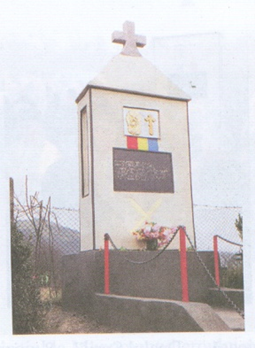
Ioanichie Druhora is the spiritual patron of the Chendrea Secondary School. On the road that passes by Dealul Șurii, which connects Hida commune and Jibou town and which passes through Chendrea, one can see the cross in memory of Druhora rising proudly on the Sălaj hill. Above a marble plaque that commemorates Druhora, two brass statuettes are mounted, depicting an angel, the heavenly symbol that guards the passersby, and a cross, which reminds us that the Transylvanians are of Romanian stock, Orthodox Christians.
Ioanichie Druhora – a Sălaj native in Avram Iancu’s army
Under the religious emblems, the three colors of the Romanian flag are displayed to commemorate the past of Romanians in Transylvania, the pain and suffering of Romanians under foreign domination. Under the tricolor, on the monument two swords are crossed, as a sign of remembrance of who the patriot Ioanichie Druhora was, a commander in Iancu’s army.
The monument was built in the summer of 2002. It was erected by the parishioners of the village of Chendrea, with Ioan Morar as the master craftsman, assisted by members of the Parish Council and by Vasile Ianchiș, under the direct guidance of the village priest, Ghiorghe Sâia.
In Chendrea there is also a commemorative plaque dedicated to the heroes who fell in duty for the defense of the nation, the language, the speech, the ancestral faith, and the borders of the Fatherland. From Chendrea, Romanians set out for the Bobâlna Uprising of 1437-1438, and for the Revolution of 1848, but also in the two great world conflagrations, World War I (1914-1918) and World War II (1939-1945).
(Eduard Farcas, “Graiul Sălajului”, November 5, 2014
http://www.graiulsalajului.ro/ioanichie-druhora-un-sljean-din-armata-lui-avram-iancu-a-2540)
Sălaj – Guide to the Localities
- “SĂLAJ – GUIDE TO THE LOCALITIES”
- Coordinator – Florica Pop, Sălaj County Library I.S. Bădescu .
- Collection, processing, editing: Lucia Bălaș, Bódis Ottilia. Zalău, 2013. ISBN 978-973-0-15798-7.
- http://www.bjs.ro/Document_Files/Ghidsalaj/00000582/lduqu_GHID%2011%20febr.%202014%20final.pdf
- pp. 74-75
Chendrea
Documentary attestation: 1350 poss. Kendurmezeu
Tourist attractions:
-The monument placed in the place called Dâmbu Șurii on the Jibou-Hida road in Chendrea, a cross monument in memory of the key collaborator of Avram Iancu who in 1848 fought against the large landowners of Hida commune, and was hanged in this village. It bears the following inscription plated in black marble:
This monument was erected in memory of the hero
Ioanichie Druhora
commander of lancers in the Revolution of 1848, treacherously killed by Hungarian detachments at Răzmerița de la Dragu in the year 1849.
Above the inscription are plated in bronze an angel and a cross, and below them the tricolor of Romania; below the inscription are drawn two swords placed in a cross. The monument was built from reinforced concrete with steel rebar in the summer of 2002, and the unveiling and consecration took place on November 8, 2002. The monument was erected by the parishioners of the village of Chendrea, with Morar Ioan as the master craftsman, assisted by members of the Parish Council and by Ianchiș Vasile under the direct guidance of the village priest, Sâia Ghiorghe.
- Historical monuments dedicated to the martyrs of Sălaj
- www.bjs.ro/Document_Files/…/oqic5_Monumente.ppt
MONUMENT DEDICATED TO IOANICHIE DRUHORA – THE MARTYR HERO OF THE ALMAȘ VALLEY IN THE 1848–1849 REVOLUTION
CHENDREA – 2002
Song XXXI
Poem written by Valentin MESEȘAN
You Will Find Me Anytime
At the Edge of Thought
Bleeding Eyes…
At the Edge of a Moment
The Ailing Wing
A Squandered Heart…
A Defeated Sword
An Unattainable Vision
An Unquenched Tear…